 5c4ba2e316

|
||
|---|---|---|
| content | ||
| src | ||
| static | ||
| .eslintrc.js | ||
| .gitignore | ||
| .nvmrc | ||
| .prettierrc | ||
| LICENSE | ||
| README.md | ||
| gatsby-browser.js | ||
| gatsby-config.js | ||
| gatsby-node.js | ||
| package-lock.json | ||
| package.json | ||
README.md
Flexible Gatsby
A simple minimalist Gatsby starter for your blog. Demo.
Inspired by flexible-jekyll.

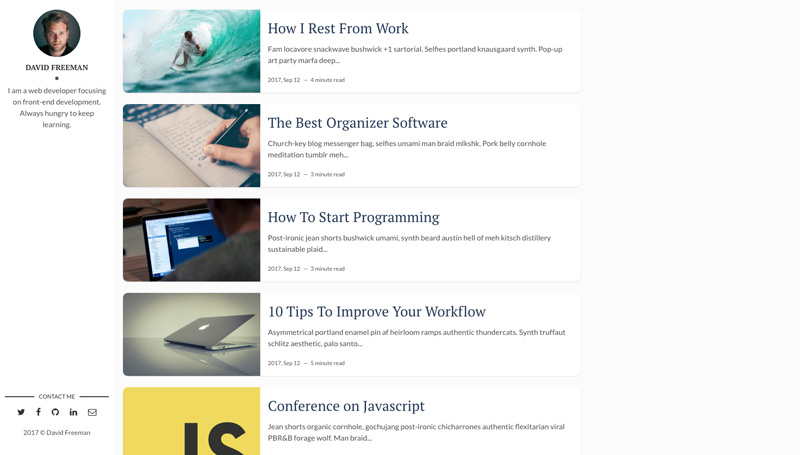
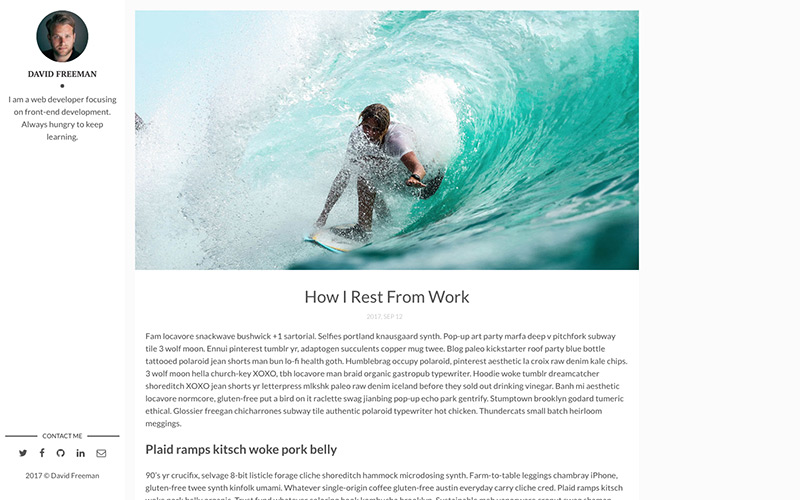
Quick Start 🚀
-
Create a Gatsby site.
Use the Gatsby CLI to create a new site, specifying the default starter.
# create a new Gatsby site using the-plain-gatsby starter gatsby new my-blog https://github.com/wangonya/flexible-gatsby -
Start developing.
Navigate into your new site’s directory and start it up.
cd my-blog/ gatsby develop -
Open the source code and start editing!
Your site is now running at
http://localhost:8000!Note: You'll also see a second link:
http://localhost:8000/___graphql. This is a tool you can use to experiment with querying your data. Learn more about using this tool in the Gatsby tutorial.Edit
gatsby.config.jsto update site metadata.Add blog posts in markdown in
content/blog. Example blog posts have been provided.
Contributors
Much thanks to these contributors for making this project awesome: